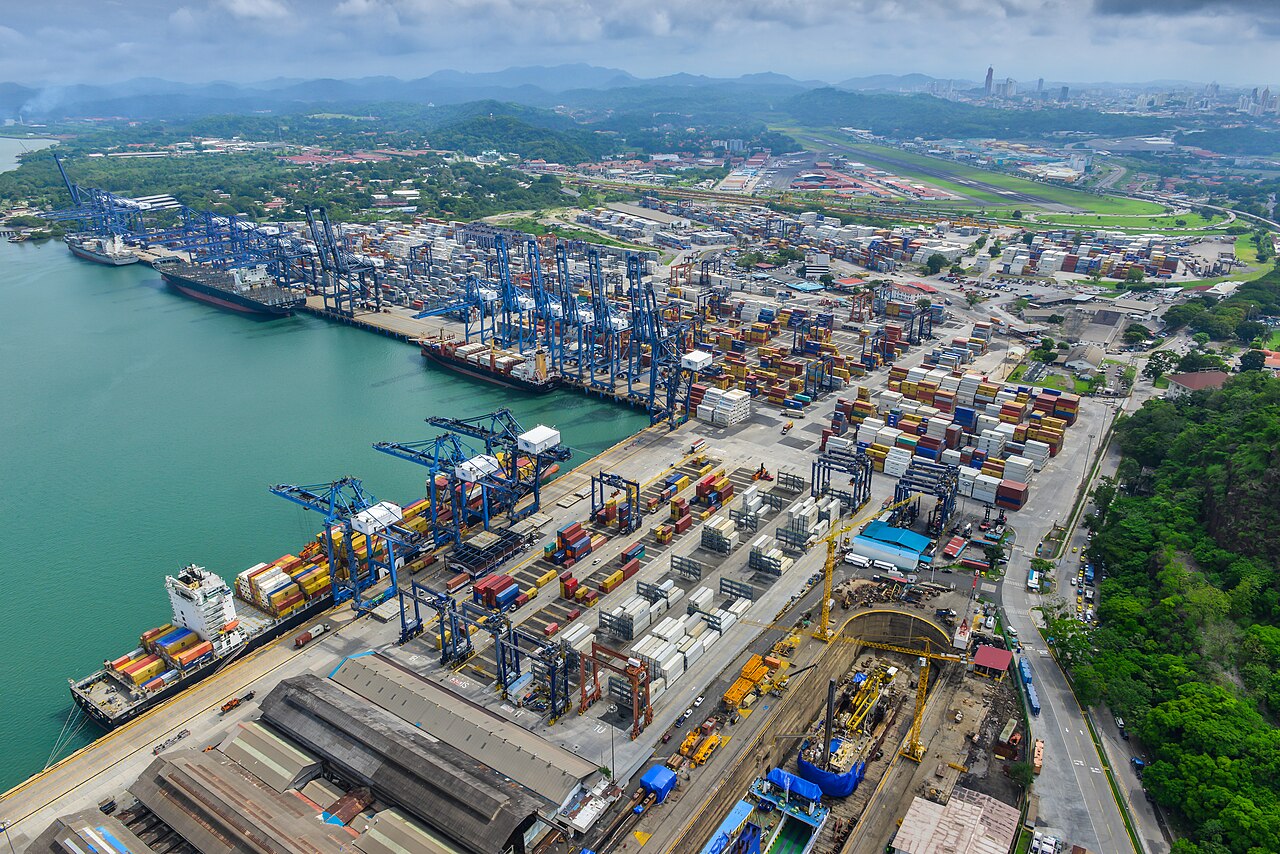
Container ships and cranes at Balboa, one of Panama's ports, photographed from above on September 19, 2016. File photograph. Credit: Edward Ortiz / Wikimedia Commons / CC BY-SA 4.0. CC BY-SA 4.0. Photo source.
Maersk wants to compete for a permanent role in Panama's port operations when the government sets the process for a long-term concession, the company's regional president told La Estrella de Panamá.
Antonio Domínguez, Maersk's president for Latin America and the Caribbean, expressed that interest in an interview published October 28. The statement sets out the company's intentions; it does not announce a concession award.
The group already has an operating role through APM Terminals at Balboa, on the Pacific side of the Panama Canal. That arrangement is temporary and must be distinguished from the longer-term opportunity Domínguez discussed.
Maersk's ambitions for Panama ports
In the La Estrella interview, Domínguez said the company was interested in participating once the government established a date for the process.
He also expressed interest in the Canal's proposed Corozal and Telfers port projects. Those plans are separate from APM Terminals' current work at Balboa. Interest across several projects should not be read as ownership, an exclusive negotiating right or a commitment by the authorities to select Maersk.
Domínguez described continuity of operations and additional port capacity as important to Panama's logistics role. His assessment is the position of a company seeking business; it is not an independent evaluation of the ports' performance.
What the temporary Balboa arrangement covers
APM Terminals announced on February 24 that it had begun operating Balboa under an arrangement lasting up to 18 months.
At that time, the company said its initial work would focus on maintaining service and stabilizing operations. It described employee continuity through employer substitution and plans for a transition to the Navis N4 operating system, including staff training.
The February announcement also identified asset inventories and audits as part of the transition. Those were announced workstreams; the statement does not establish that every one has since been completed.
The government approved Balboa's transitional contract with APMT Panamá on February 23. In a separate resolution, it authorized TIL Panamá to operate Cristóbal for up to 18 months. The two operators' mandates concern different terminals.
The October interview therefore adds a prospective bidder's position to the port debate. The evidence reviewed establishes Maersk's interest and APM Terminals' temporary mandate, but does not establish the terms or award of a new permanent concession.