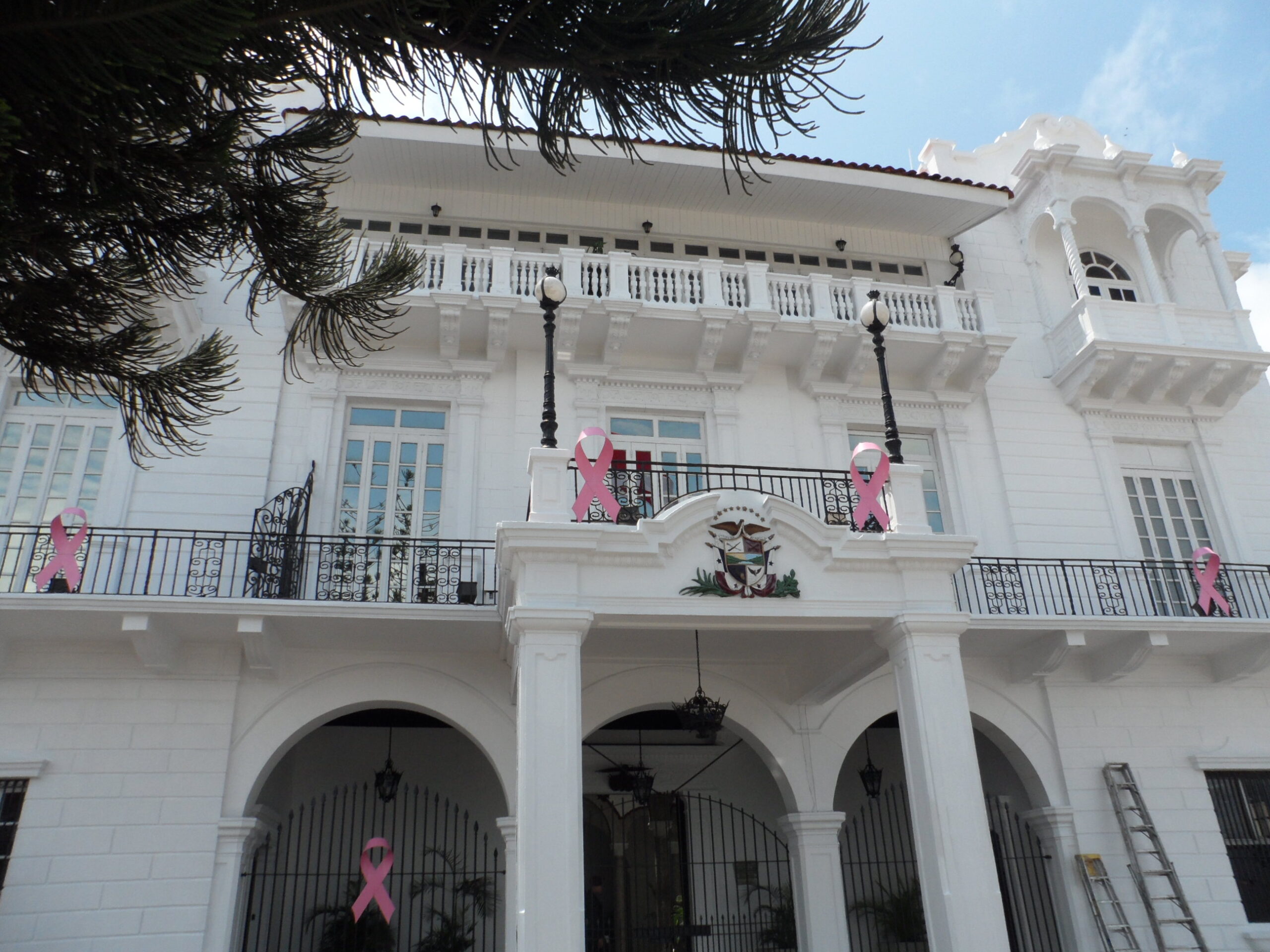
Panama's presidential palace, photographed on September 30, 2012. Archival illustration for coverage of the government's earthquake housing plan. Credit: Y.Y.Y.G. / Wikimedia Commons / CC BY 2.0. CC BY 2.0. Photo source.
Panama's government has expanded its earthquake reconstruction plan to 2,700 homes and changed its financing arrangements to help contractors begin work, following the October 9 earthquake that damaged communities across the country's interior.
President José Raúl Mulino announced 1,400 additional homes on October 27, adding to 1,300 already under construction. The program covers Coclé, Veraguas, Herrera and Los Santos, according to La Prensa's account of the government's briefing.
Housing Minister Jaime Jované said officials were bringing in more contractors to work in additional communities, with March 2027 as the reconstruction target. The numbers could grow as damage inspections continue. These are announced construction commitments and a target date; they do not represent completed homes.
How Panama earthquake housing will be financed
The Cabinet approved a change to the emergency trust mechanism on October 27. The Presidency's explanation says the Finance Ministry will administer and transfer resources through Banco Nacional de Panamá, with budget availability required for 2026 and 2027.
The emergency procurement authorization adopted after the earthquake allowed spending of up to 100 million balboas. That ceiling should not be read as a new, additional allocation approved on October 27.
Officials described the financing change as a way to move beyond paying contractors only after work was completed. Banco Nacional general manager Javier Carrizo said a working group involving the bank, the Finance Ministry and the Comptroller's Office would begin meeting on October 28, with the Housing Ministry invited to participate.
Comptroller countersignature remains part of the arrangement. Unused resources must return to the Treasury after the emergency contracts have been settled, according to the Presidency.
Temporary shelter and repairs
Mulino said temporary structures would be installed beside homes being rebuilt to improve conditions for displaced families while construction proceeds.
Panamá América also reported that the response includes materials for homes with partial damage. That separates repair assistance from the replacement houses in the headline total.
Labor Minister Jackeline Muñoz described a parallel effort to train 1,200 young people in construction and connect workers with jobs, the newspaper reported. Its effectiveness, like the building timetable, will depend on implementation.
The expansion follows criticism of the pace of assistance. In comments reported by Infobae on October 26, APEDE president Alberto López Tom called the response insufficient and sought public accounting of donations and spending. His remarks preceded the new housing announcement; they are not a response to its final terms.